
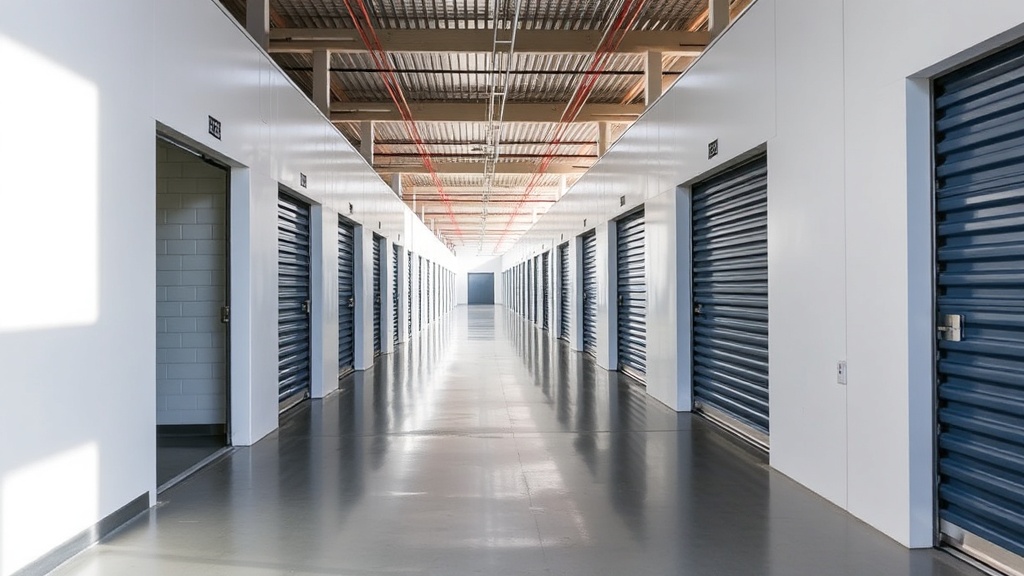
DSCR loans for self-storage facilities can work in 2026, but only for stabilized facilities where trailing income supports the debt after real expense adjustments. I like self-storage more than office and some small retail right now, but I do not like pro forma underwriting dressed up as DSCR. If the facility is still leasing up, call it bridge debt and price the risk honestly.
In my experience advising investors, storage looks simple until the lender asks for the trailing 12-month profit and loss, occupancy history, unit mix, insurance, taxes after reassessment, management expense, and capital reserve. Then the “easy passive facility” becomes a real operating business.
2026 self-storage DSCR loan ranges
For adjacent topics, read current DSCR loan rates May 2026, DSCR loan rate spread analysis, DSCR vs bridge loan, and compare DSCR loans.
Share your information to request current HELOC options. Eligibility and terms vary.
How lenders calculate storage DSCR
The lender starts with net operating income, not gross rent. They usually adjust income and expenses before dividing by annual debt service.
| Underwriting item | Common adjustment |
|---|---|
| Gross potential rent | Based on actual rent roll, not wishful street rates |
| Physical vacancy | Stabilized vacancy often 8%–12% minimum |
| Economic vacancy/concessions | Discounts and bad debt deducted |
| Management | Underwritten even if self-managed, often 4%–6% |
| Repairs/maintenance | Normalized from T-12 plus reserves |
| Taxes | Reassessed purchase-tax estimate in many states |
| Insurance | Current quote required; rising fast in storm/fire markets |
The lender isn't going to tell you this, but self-management savings rarely get full credit. If you manage it yourself, good for your cash flow. The lender still wants to know the property works with professional management baked in.
Real deal example
A small operator came to me with a 312-unit Class B facility listed at $2,800,000. Occupancy was 88%. The broker advertised $247,000 NOI and a 8.8% cap. The lender's underwritten NOI was lower.
| Line item | Broker OM | Lender view |
|---|---|---|
| Effective gross income | $410,000 | $392,000 |
| Operating expenses | -$163,000 | -$181,000 |
| NOI | $247,000 | $211,000 |
| Loan amount requested | $1,960,000 | $1,820,000 max comfort |
| Annual debt service at ~8.25% | ~$176,000 | ~$164,000 |
| DSCR | 1.40x advertised | 1.29x underwritten |
The deal still worked, but not at the requested leverage. We reduced debt, negotiated a seller credit for deferred gate repairs, and kept 12 months of debt service in reserves. Without that, I would have told him to pass.
What makes self-storage attractive
Storage has month-to-month leases, sticky tenants, low payroll relative to apartments, and the ability to adjust rents quickly. A well-located facility with 85%+ occupancy can be durable. Unit-level diversification also helps; losing ten tenants is not the same as losing one office tenant.
But storage is not immune. New supply can crush rents. Online marketing costs can rise. Climate-controlled assets carry higher utility and HVAC exposure. Security issues can damage reputation quickly.
What most investors get wrong
They underwrite occupancy but ignore achieved rent. A facility can be 92% occupied with too many discounted units. Physical occupancy is not economic occupancy.
They also forget property taxes after sale. A reassessment can add $20,000–$60,000 of annual expense in some markets. That can knock a 1.28x DSCR down to 1.12x.
Finally, they treat expansion land as free upside. Expansion requires permits, paving, drainage, security, construction cost, lease-up time, and often bridge capital. I value it, but I do not let it justify overpaying for current income.
Documents to gather before applying
| Document | Why it matters |
|---|---|
| T-12 P&L | Establishes actual NOI |
| Current rent roll | Shows unit mix and delinquency |
| Occupancy history | Proves stability |
| Insurance quote | Major 2026 underwriting variable |
| Property condition report | Gates, roofs, paving, drainage |
| Market supply report | New competition can hurt rents |
| Management agreement or plan | Lender wants operational competence |
When I would avoid DSCR storage financing
I avoid it when occupancy is below 75% without a strong bridge plan, when income relies on aggressive rent hikes, when deferred maintenance is large but not budgeted, or when the borrower has no storage operating experience and no third-party manager.
Here's what I tell every client who sits across from me: DSCR debt rewards proven income. If you are buying a turnaround, use turnaround financing. Do not force a stabilized loan onto an unstabilized business.
Explore Home Equity Options
Explore home equity options based on the information you provide. A lender determines eligibility and terms.
Explore HELOC OptionsSubmitting this form requests information; it is not a loan approval or offer.