
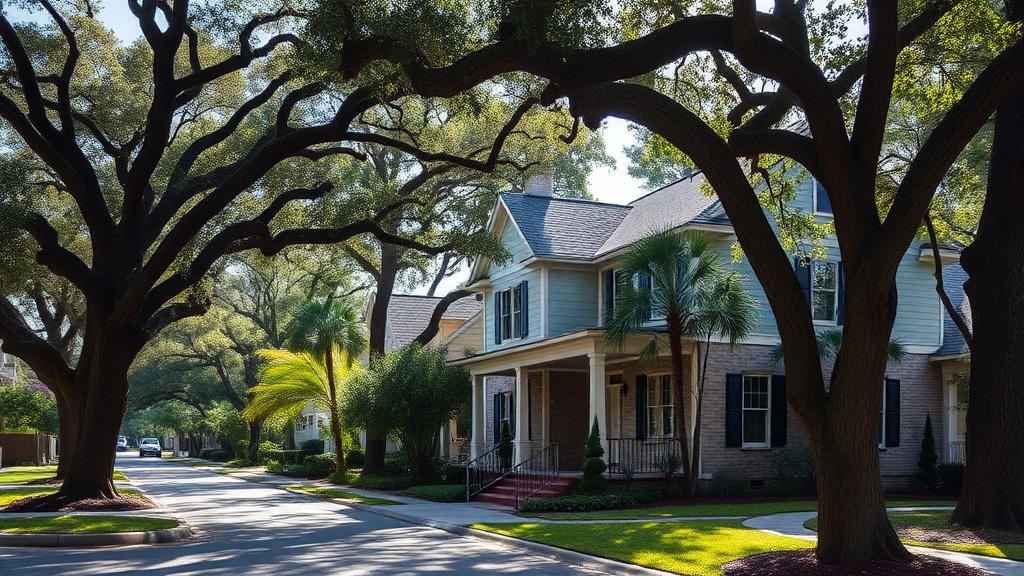
DSCR Loans in Baton Rouge, LA: LSU Capital City Market
DSCR loans in Baton Rouge help rental-property investors qualify from the cash flow of the property instead of personal tax returns. That makes them useful for self-employed borrowers, portfolio landlords, out-of-state investors, and buyers who want to hold property in an LLC. But Baton Rouge is not one uniform rental market. A house near LSU, a mid-city duplex, a suburban rental in Zachary, and a flood-zone property near the Amite River do not underwrite the same way.
The practical job is to connect Baton Rouge rental demand with DSCR math, insurance reality, and neighborhood-level risk. This guide focuses on how investors should evaluate the local market before they apply.
The short answer
A Baton Rouge DSCR loan can work when gross monthly rent covers the full PITIA payment: principal, interest, taxes, insurance, and association dues if applicable. Many lenders prefer a 1.20 to 1.25 DSCR, though some will consider lower ratios with more equity, stronger credit, or higher reserves.
Share your information to request current HELOC options. Eligibility and terms vary.
The Baton Rouge angle matters because rents can be supported by several demand drivers: LSU students and staff, state government, healthcare, petrochemical and industrial employment, downtown and mid-city renters, and families looking near commuter corridors. The same city also carries real risks: flood insurance, storm exposure, older housing stock, property-condition issues, and block-by-block rent variation.
Why Baton Rouge attracts rental investors
Baton Rouge offers a mix of affordability and tenant depth that can appeal to investors priced out of larger Sun Belt metros. Louisiana's capital city has a large university presence, public-sector employment, healthcare jobs, industrial activity along the river corridor, and neighborhoods where single-family rentals and small multifamily properties still trade at prices that can pencil with the right financing.
LSU is a major part of the rental story, but it is not the whole story. Student rentals can produce strong gross rent, especially when leased by the bedroom, but they require tighter management, turnover planning, parking awareness, and realistic repair budgets. Workforce rentals may grow more slowly but can offer steadier occupancy. Suburban rentals may attract families, but purchase prices and insurance costs can compress DSCR.
A good Baton Rouge DSCR file shows that the investor understands which rental segment the property serves. Lenders do not need a market thesis essay, but your appraisal rent schedule, lease, insurance quote, and reserves should tell a coherent story.
How DSCR lenders calculate the file
The DSCR formula is monthly rent divided by monthly housing payment. If a property rents for $1,800 and the full payment is $1,500, the DSCR is 1.20. If insurance or taxes push the payment to $1,750, the DSCR falls to 1.03. That is why Baton Rouge investors should not estimate insurance late.
Most lenders use the lower of actual lease rent or appraiser-supported market rent, depending on program rules. For vacant properties, the appraiser's rent schedule often becomes the key document. For furnished, student, or short-term rentals, lenders vary: some use long-term market rent, some allow documented short-term income, and some require a specific rental history.
Typical requirements include investment occupancy, credit commonly starting around 620 to 660, down payments often around 20% to 25%, appraisal, rent schedule, reserves, entity documents for LLC closings, and property insurance. Stronger DSCR, lower LTV, and better credit usually create more lender options.
Baton Rouge numbers to model before offering
Do not model the property with only principal and interest. Baton Rouge investors should build a payment stack that includes taxes, landlord insurance, flood insurance if required, HOA dues, property management, vacancy, repairs, lawn care, pest control, and utilities if the rental structure includes them.
Insurance deserves special attention. Louisiana property-insurance costs can be meaningful, and storm or flood exposure can change cash flow quickly. Before you waive contingencies, get an insurance quote and confirm flood-zone status. A property that looks like a 1.25 DSCR with a generic insurance estimate may fall under 1.0 after the real premium appears.
Property condition also matters. Many attractive Baton Rouge rentals are older homes. Deferred roofs, HVAC age, foundation movement, electrical updates, and drainage issues can become lender conditions or post-closing cash drains. DSCR loans reduce income documentation; they do not remove property risk.
LSU-area rentals
Near LSU, investors often look at student demand, walkability, parking, bedroom count, and lease cycles. The upside is strong recurring demand. The downside is turnover, wear and tear, party risk, guarantor management, and seasonal leasing pressure. A DSCR lender may underwrite the market rent, but you should underwrite the operational reality.
For student rentals, confirm local rules, parking constraints, HOA restrictions if applicable, and whether the property layout truly supports the rent assumption. A four-bedroom house may not command premium rent if bedrooms are awkward, bathrooms are insufficient, or parking is limited. Conservative repair reserves are not optional in this segment.
Mid-city, downtown, and workforce rentals
Mid-city and downtown-adjacent rentals can attract young professionals, healthcare workers, service workers, government employees, and renters who value location. These properties often require a sharper eye for street-level comps. One block may support renovated rents; another may not.
For DSCR underwriting, the strongest files use recent lease comps from similar property condition and bedroom counts. If your pro forma depends on a renovation premium, document the scope and timeline. Lenders usually care about current or market-supported rent, not your optimistic six-month plan.
Suburban and commuter rentals
Areas around Baton Rouge can support family-oriented rentals with longer tenancy and less student turnover. The tradeoff is that acquisition prices may be higher, and rent-to-price ratios may be less forgiving. DSCR loans still work, but the file may need more down payment to reach the target ratio.
Investors should compare school-zone demand, commute routes, insurance, property taxes, and repair expectations. A newer suburban rental may have fewer maintenance surprises, but if the rent premium is not enough to offset purchase price, the DSCR can be weaker than an older in-city property.
A Baton Rouge DSCR example
Assume an investor buys a small Baton Rouge rental for $190,000 with 25% down. The loan amount is $142,500. Principal and interest at an investor rate might be around $950 to $1,050 depending on pricing. Taxes add $175, insurance adds $250, and property management/vacancy are not part of lender PITIA but matter to investor cash flow. If lender PITIA is $1,475 and appraised rent is $1,850, the DSCR is 1.25.
Now change only insurance to $425 because of property age or location. PITIA rises to $1,650 and DSCR drops to 1.12. The property may still close, but the rate, reserve requirement, or down payment may change. That is why local expense accuracy matters as much as rent.
Documents to prepare
For a cleaner Baton Rouge DSCR closing, prepare the purchase contract, credit authorization, entity documents if closing in an LLC, bank statements for down payment and reserves, insurance quote, current lease if occupied, rent roll for small multifamily, property-management estimate if relevant, and any repair bids for condition issues.
If the property is a condo or townhome, add HOA dues, master insurance, budget, rental rules, and project questionnaire. If the property is in a flood zone, confirm flood insurance early. If it is a short-term rental, verify local rules and ask lenders whether they accept STR income for qualification.
Lender questions specific to Baton Rouge
Ask whether the lender has Louisiana investor-loan experience, how they treat flood insurance, whether they allow LLC title, minimum DSCR at your target LTV, reserve requirements, prepayment penalty options, and whether they use actual lease rent or appraisal market rent. If your strategy involves student, furnished, or short-term rentals, ask that directly before ordering an appraisal.
Also ask about property-condition overlays. Some DSCR lenders are comfortable with light repairs; others require the property to be rent-ready before closing. If the deal is a value-add property, the wrong lender can derail the timeline.
Red flags in Baton Rouge deals
Be cautious with properties whose DSCR only works using best-case rent, properties with unknown insurance cost, homes with roof or foundation concerns, student rentals without a turnover budget, flood-zone properties without confirmed premiums, and neighborhoods where rent comps are too thin or too far away.
Bottom line
DSCR loans can be a strong fit for Baton Rouge investors because the city has multiple rental-demand engines and many properties where income-based qualification is more useful than personal-income underwriting. But the loan only works if the local numbers are real.
Model rent conservatively, verify insurance early, understand the neighborhood tenant base, and compare lenders before locking terms. In Baton Rouge, good DSCR investing is not just finding a rental. It is matching the property, financing, and operating plan to the exact demand pocket you are buying.
Baton Rouge offer worksheet
Before writing an offer, build three rent cases and three expense cases. The rent cases should include current lease, conservative market rent, and optimistic renovated rent. The expense cases should include quoted insurance, higher storm/flood insurance, and a repair-heavy first year. Run DSCR under each combination. If the deal fails under a modest insurance increase, it is not as safe as the listing pro forma suggests.
For LSU-area rentals, add a turnover line item. Student tenants can be profitable, but repainting, cleaning, furniture damage, lease-up timing, and parent-guarantor administration are real operating costs. For workforce rentals, add vacancy and maintenance assumptions based on the property's age and condition. For suburban rentals, test whether the family-rental premium offsets the higher purchase price.
A lender may approve a file that still disappoints the investor. DSCR underwriting focuses on PITIA coverage. Your actual return depends on management, repairs, vacancy, utilities, capital expenditures, and exit value. Keep both scorecards.
Local due diligence before appraisal
Confirm flood zone, insurance premium, roof age, HVAC age, drainage, foundation condition, rental licensing or local restrictions if applicable, and comparable rents within the same demand pocket. Baton Rouge has enough block-by-block variation that citywide averages can mislead. A comp near LSU does not automatically support a property across town, and a renovated mid-city rent does not automatically apply to an older unrenovated house nearby.
Once those facts are clear, shop lenders with the same scenario. Give each lender the purchase price, down payment, estimated rent, insurance quote, flood status, property type, occupancy plan, entity title preference, and credit tier. Comparing consistent quotes is the only fair way to know whether the deal works.
After closing: protect the DSCR
The loan closes on a snapshot, but the investment succeeds over time. Recheck rent annually, renew insurance early, inspect drainage before storm season, and maintain a capital reserve for roof, HVAC, plumbing, and tenant-turnover costs. If a property is near the edge of lender DSCR at purchase, small cost increases can erase cash flow.
Baton Rouge investors should also keep cleaner records than they think they need. Save leases, rent deposits, repair invoices, insurance renewals, flood documentation, and property-management reports. Those records help with refinancing, portfolio reviews, tax planning, and future lender conversations.
When a Baton Rouge DSCR deal is not worth forcing
Do not force a deal when insurance is unknown, the appraisal rent needs to be heroic, repairs are underbid, or the neighborhood rent story is borrowed from a different submarket. The right DSCR loan makes a solid rental easier to buy. It should not be used to rationalize a property that only works on paper.
Final underwriting gut check
Before ordering the appraisal, ask one final question: would this property still make sense if rent were slightly lower and insurance slightly higher? If the answer is yes, the deal has room to breathe. If the answer is no, use the DSCR calculation as a negotiation tool rather than a reason to stretch. Baton Rouge can be a strong rental market, but disciplined investors let the numbers, not the headline yield, decide.
Explore Home Equity Options
Explore home equity options based on the information you provide. A lender determines eligibility and terms.
Explore HELOC OptionsSubmitting this form requests information; it is not a loan approval or offer.