
Cash Buyer DSCR Refinance Case Study: How One Rental Can Fund the Next Three
Paying cash for a rental can win the deal. Leaving all that cash trapped in the property is where the strategy usually stalls.
A DSCR cash-out refinance gives a cash buyer a clean second move: season the property, document market rent, refinance against the rental's income, and redeploy part of the equity into the next down payment. The loan is underwritten against the property's debt service coverage ratio, not the investor's W-2 income or tax-return income. That matters for cash buyers who are self-employed, retired, scaling quickly, or intentionally keeping personal debt-to-income ratios out of the conversation.
This case study uses realistic 2026 underwriting assumptions. It is not a promise that every lender will approve the same structure. It is a model for thinking like an investor before you wire all-cash funds into a property.
Share your information to request current HELOC options. Eligibility and terms vary.
The starting deal
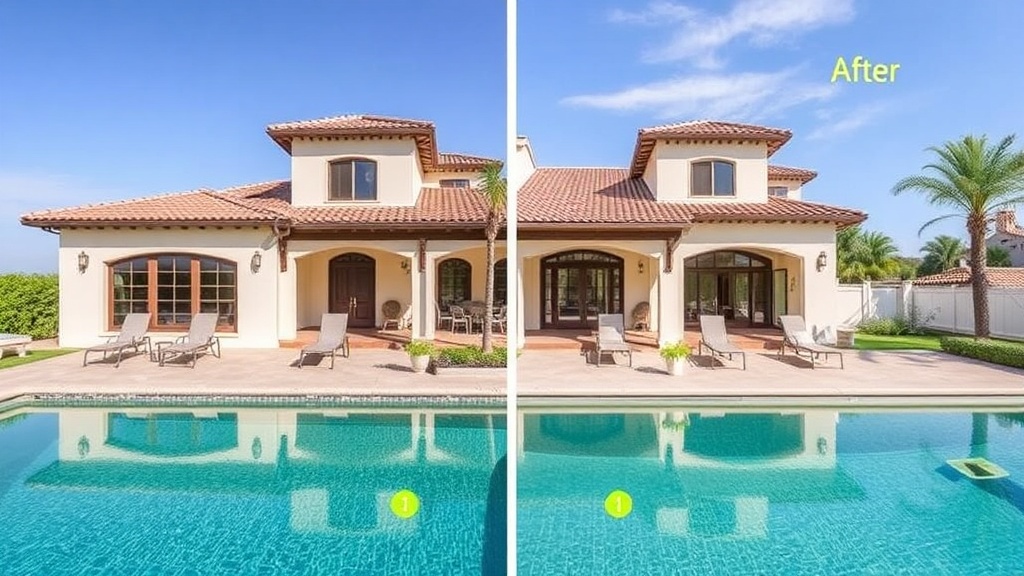
Assume an investor buys a small single-family rental for cash because the seller wants certainty and speed.
| Item | Assumption |
|---|---|
| Purchase price | $180,000 |
| Light repairs and furnishings | $20,000 |
| Total cash invested | $200,000 |
| Stabilized appraised value after repairs | $240,000 |
| Market rent | $2,150/month |
| Taxes, insurance, HOA | $475/month |
| DSCR refinance rate | 7.75% |
| Term | 30-year fixed |
| Target lender DSCR | 1.15-1.25 |
| Max cash-out LTV used here | 70% |
The investor's first win is not magical appreciation. It is buying well, completing a modest rehab, and proving rent. A lender does not care that the investor loves the deal. The lender cares whether the rent can cover the proposed mortgage payment with a cushion.
The DSCR math after stabilization
At a 70% loan-to-value ratio on a $240,000 value, the new loan would be about $168,000. At 7.75% over 30 years, principal and interest is roughly $1,204 per month. Add the estimated $475 per month for taxes, insurance, and HOA, and the total PITIA payment is about $1,679.
The DSCR calculation is simple:
Gross monthly rent ÷ monthly PITIA = DSCR
In this case:
$2,150 ÷ $1,679 = 1.28 DSCR
A 1.28 DSCR is meaningfully stronger than a break-even 1.00 DSCR. It gives the lender a margin for vacancy, repairs, and ordinary rental volatility. It also gives the investor choices. If rates move higher or the appraisal comes in lower, the deal might still qualify at a slightly smaller loan amount.
What cash actually comes back
The refinance does not return the full $168,000 to the investor. Closing costs, prepaid escrow, lender fees, and any title or recording costs reduce net proceeds. A reasonable planning estimate is 2% to 4% of the loan amount.
| Refinance line | Estimate |
|---|---|
| New DSCR loan | $168,000 |
| Estimated closing costs/prepaids | $5,500-$7,500 |
| Net cash returned | $160,500-$162,500 |
| Cash still left in first property | $37,500-$39,500 |
That remaining cash is the investor's equity cushion. It is not a failure. It is the reason the lender can offer the loan and the reason the investor has downside protection if the market gets choppy.
If the investor uses $55,000 as the down payment and closing-cost reserve for each additional rental, the returned cash can support roughly three more acquisitions. That is where the "4X" idea comes from: one cash purchase can become one stabilized rental plus the seed capital for three more financed rentals. The catch is that each new property still needs to stand on its own DSCR math.
Why DSCR works better than a conventional cash-out loan here
A conventional investment-property refinance can be cheaper, but it often creates friction for the exact investor who likes all-cash acquisitions. The lender may count personal income, tax-return income, debt-to-income ratio, number of financed properties, employment history, and entity ownership. A strong investor with complicated finances can look weak on paper.
A DSCR lender asks a narrower question: does this rental property produce enough income to support the new debt?
That does not mean DSCR loans are loose. They usually require a credit score floor, reserves, an acceptable appraisal, property condition, landlord insurance, and a rent schedule. But they are built for investors who want the asset's income to carry the loan.
Use our DSCR loan calculator before you submit a file. A five-minute sensitivity check can tell you whether the deal is likely to work at 70% LTV, whether you need to stop at 65%, or whether the rent is too thin for a cash-out refinance.
The timeline that keeps the file clean
Cash buyers get into trouble when they assume the refinance is automatic. The clean version has a sequence.
- Buy at a basis that works before leverage. If the property only works after optimistic cash-out proceeds, the deal is too fragile.
- Complete repairs that affect rent and appraisal. Cosmetic work is fine, but the appraiser and tenant need to see real rental value.
- Document rent. A signed lease is strongest for long-term rentals. For short-term rentals, some lenders accept STR schedules, platform history, or market data, but overlays vary.
- Wait for seasoning if required. Some DSCR lenders allow delayed financing quickly after a cash purchase; others want 3, 6, or 12 months before full cash-out treatment.
- Order quotes from several DSCR lenders. A half-point rate difference can change DSCR and cash-out proceeds.
- Keep reserves untouched. Cash-out proceeds are not a substitute for reserves. Lenders may want several months of PITIA after closing.
What can break the 4X plan
The strategy is powerful because it adds leverage after the risky acquisition phase. It is also easy to overstate. Four problems break the model most often.
The appraised value comes in low. If the appraisal lands at $220,000 instead of $240,000, a 70% loan is $154,000, not $168,000. That can erase one future down payment.
The rent schedule is lower than the investor's estimate. A property advertised for $2,300 does not automatically underwrite at $2,300. Lenders lean on leases, appraiser rent schedules, or defensible market data.
The investor ignores prepayment penalties. Many DSCR loans include a 3-2-1 or 5-4-3-2-1 prepayment penalty. That can be acceptable for a long hold, but it is expensive if the investor plans to sell or refinance again quickly.
The next three deals are weaker than the first. Returned capital is not free money. Each additional property needs its own rent cushion, repairs budget, insurance estimate, and exit plan.
A safer version of the play
The conservative version is not "take every dollar the lender offers." It is "take enough capital out to keep moving while leaving the first property durable."
For example, the investor could cap the refinance at 65% LTV. On a $240,000 value, that is a $156,000 loan. The payment is lower, the DSCR is stronger, and the equity cushion is wider. Net cash-out may fund two next purchases instead of three, but the first asset becomes harder to break.
That trade-off is often worth it. A portfolio that grows slightly slower and survives vacancy is better than a spreadsheet that only works in perfect weather.
Checklist before a cash buyer uses DSCR cash-out
- Run DSCR at 65%, 70%, and 75% LTV so you know the breaking point.
- Stress-test the rate at 0.50% above the quote.
- Confirm whether the lender uses lease rent, market rent, or short-term rental income.
- Ask about seasoning before you buy.
- Price landlord insurance before final underwriting.
- Keep 6 months of PITIA reserves if the property is older, remote, seasonal, or repair-heavy.
- Compare at least three lenders; DSCR overlays vary more than conventional overlays.
- Decide whether a prepayment penalty fits your hold period.
For the broader product mechanics, read DSCR loan requirements and DSCR cash-out refinance basics. The case-study lesson is simple: cash can win the first property, but DSCR financing is what can make the capital reusable.
Bottom line
A cash buyer can use a DSCR refinance to turn one stabilized rental into the launchpad for multiple purchases. The move works when the property was bought below stabilized value, rent is documented, and the refinance still leaves a healthy coverage ratio.
Capital stack worksheet for the next three purchases
The cash-out refinance only creates momentum if the next purchases are underwritten with the same discipline as the first one. A practical worksheet keeps the investor from treating refinance proceeds like found money.
| Next-purchase item | Conservative target |
|---|---|
| Down payment | 20%-25% of purchase price |
| Closing costs | 3%-4% of purchase price |
| Initial repair reserve | $7,500-$15,000 per property |
| Operating reserve after closing | 6 months of PITIA |
| Minimum projected DSCR | 1.15 before optimism, 1.25 preferred |
| Maximum rent haircut in stress test | 10%-15% |
If the investor has about $161,000 of net cash-out proceeds, that does not mean three $300,000 rentals are automatically safe. Three $220,000 rentals with $55,000 of total cash needed per property may be realistic. Three $300,000 rentals might require more like $75,000 to $85,000 each once closing costs and reserves are included.
The worksheet protects the original win. The first rental should not become the ATM that funds three fragile acquisitions. If the next deal cannot survive a lower rent estimate, a higher insurance quote, or a month of vacancy, it is not a good use of recycled capital.
Exit-financing questions to ask before the cash purchase
Ask these questions in plain language:
- What seasoning period applies after an all-cash purchase?
- Do you offer delayed financing, full cash-out, or only rate-and-term treatment at first?
- What is the maximum LTV for this credit score, property type, and DSCR range?
- Do you use appraiser market rent, a lease, or another rent source?
- How many months of reserves will be required after closing?
- Will title in an LLC change pricing or documentation?
- Is there a prepayment penalty, and can it be bought out?
- Are there loan-size minimums that affect smaller rentals?
These answers can change the purchase price you are willing to pay. A property that works with full cash-out after 90 days may not work if the lender requires 12 months of seasoning or caps the first refinance at 60% LTV.
Stress test: the deal after bad news
A useful case study should show the downside, not only the headline return. Here is a simple stress test on the same property.
If the appraisal comes in at $225,000 instead of $240,000, a 70% loan is $157,500. If the lender uses $2,000 of rent instead of $2,150, and the PITIA payment lands around $1,610, the DSCR is 1.24. That still works, but net cash-out might drop by $10,000 to $12,000.
If insurance jumps by $150 per month and rent is underwritten at $1,900, DSCR can fall close to 1.08. At that point, the investor may need to lower the loan amount, accept less cash out, or wait until rent history supports a stronger file.
That is the real discipline of this strategy: buy so the refinance still works after ordinary bad news. The goal is not to force maximum proceeds. The goal is to keep capital moving without turning one good rental into a portfolio-wide risk.
Internal-link plan for the case study
A page like this should not sit by itself. It should be linked from broader DSCR education pages because the case study explains the practical sequence behind the product. The strongest internal links are contextual, not a footer dump.
Add links from pages that discuss cash-out refinance, BRRRR investing, DSCR requirements, and rental-property calculators. The anchor text should match what a reader is trying to do: "DSCR refinance after a cash purchase," "cash-out DSCR example," or "recycle capital with a rental refinance." That language is more useful than repeating the exact title.
The page should also link outward to the next step. A reader who understands the case study should be able to calculate their own coverage ratio, compare DSCR requirements, and decide whether to ask lenders about delayed financing. That path turns the article from a generic explanation into a decision page.
My editorial take
The attractive part of this strategy is also the danger: it makes growth feel mechanical. Buy cash, refinance, repeat. Real portfolios are messier. Insurance changes, appraisals disappoint, tenants move out, and lenders tighten overlays. The investors who last are not the ones who squeeze the biggest loan out of every property. They are the ones who preserve optionality.
For most cash buyers, the right DSCR refinance is the one that leaves enough equity and liquidity to sleep through a bad quarter. If that means funding two additional rentals instead of three, the slower plan may produce the better portfolio.
Explore Home Equity Options
Explore home equity options based on the information you provide. A lender determines eligibility and terms.
Explore HELOC OptionsSubmitting this form requests information; it is not a loan approval or offer.